
Blog Posts
How To Cure Hormonal Imbalance In Females | ALIINE

There's a quiet, highly sensitive communication network running underneath every feeling of vitality, mental sharpness, and physical strength: the endocrine system. Hormones act as the body's master regulators, shaping metabolic rate, mood stability, skin density, sleep patterns and more. When this network stays in balance, energy tends to flow with less effort, and physical change follows naturally.
For many women, small shifts in that internal balance may get brushed off as normal stress or just getting older, even while they subtly build friction throughout the body. Learning how to balance female hormones is about far more than fixing occasional fatigue or discomfort. It works as a proactive strategy, one aimed at protecting healthspan, restoring metabolic flexibility, and building vitality that actually holds up over time.
Understanding Endocrine Dynamics: What is Hormonal Imbalance?
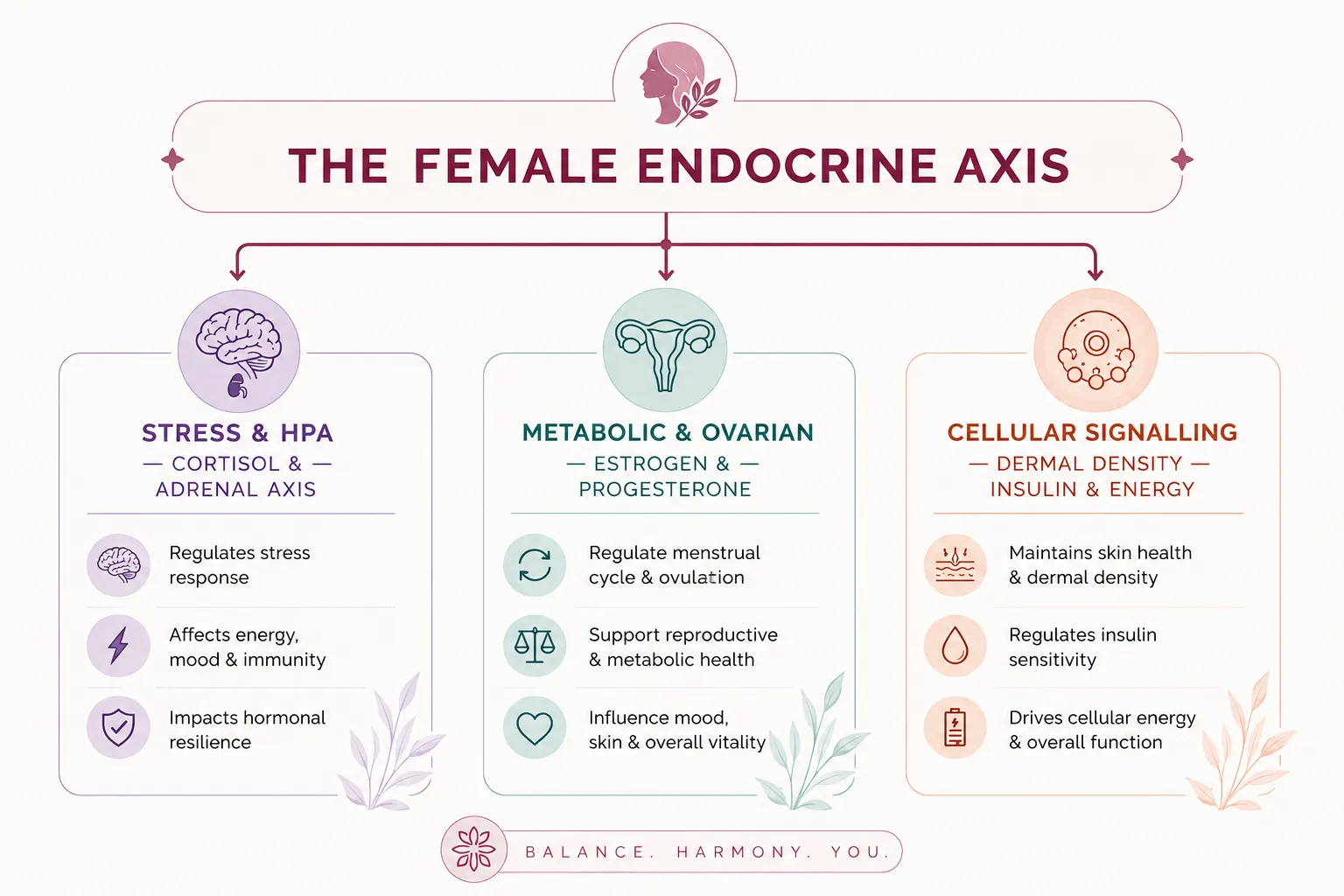
Before trying to fix anything internally, it helps to ask, “What is hormonal imbalance in females? and what does that actually look like in the body?” Female hormones, primarily oestrogen, progesterone, thyroid hormones, and cortisol, act as chemical messengers, regulating metabolic rate, stress responses, skin density, and sleep cycles.
A female hormone imbalance may show up when the body produces too much or too little of a particular hormone, further disrupting communication pathways. Since these messengers work together as one interconnected system, a shift in one hormone tends to set off secondary hormonal changes across the rest of the body. Put simply, that's what is hormonal imbalance at its core: one signal drifting off course, and everything else adjusting around it.
Why Hormonal Imbalance Occurs in Females
Answering why hormonal imbalances occur in females means looking honestly at what modern life asks of the body. Chronic stress sits near the top of the list, since it raises cortisol and diverts precursor molecules that would otherwise go toward progesterone production; however, some other factors may contribute:
Environmental exposure: Toxins and everyday pollutants that quietly interfere with hormonal signalling
Poor sleep: Disrupts the recovery window hormones rely on to stay in rhythm
Nutrient-poor diets: Leave the body short on what it needs to produce and regulate hormones properly
Natural age-related changes: Shifts that happen on their own as the body moves through different life stages
Left unaddressed, a persistent hormonal problem in female health tends to show up as:
Low energy, poor sleep, mood changes, or brain fog
Stubborn fat gain, muscle loss, or metabolic slowdown
High stress levels or signs of burnout
Metabolic resistance and premature skin ageing
An Integrative Protocol: How to Balance Hormones
Fixing an endocrine shift takes a structured, deliberate approach. A lot of people searching for how to cure hormonal imbalance in females end up missing a basic truth: hormones aren't cured; they're recalibrated over time through advanced diagnostics and expert interpretation.
Lasting endocrine balance generally comes down to three connected stages.
Protocol Stage | Key Focus | Strategic Action |
Diagnostics & Precision Nutrition | Comprehensive Hormone & Metabolic Panel | Assess thyroid, adrenal, sex hormones, and insulin markers; apply dietary guidance to support hormonal stability and insulin sensitivity. |
Adrenal & Nervous System Recovery | Parasympathetic Down-Regulation | Calm the HPA axis and regulate cortisol using therapies such as dry floatation, infrared saunas, and cold-based recovery. |
Advanced Longevity & Muscle Interventions | Cellular Oxygenation & Muscle Activation | Leverage ReVitale Chamber sessions, red-light therapy, and EMS muscle stimulation to support hormone pathways and tissue repair. |
Step 1: Shift to Precision Systemic Nutrition
Blood sugar swings are one of the fastest ways to throw female hormones off balance. Repeated insulin spikes trigger the body's stress response, raising cortisol and disrupting ovarian hormone balance.
Support Oestrogen Metabolism: Vegetables like broccoli, kale, and Brussels sprouts help the liver clear used oestrogens.
Prioritise Healthy Fats: Oestrogen and progesterone are built from cholesterol, so healthy fats from avocados, nuts, seeds, and wild-caught fish matter more than most people think.
Stabilise Glucose Output: Pairing carbs with protein and fibre keeps blood sugar and energy steadier to show you how to balance female hormones through targeted nutrition strategies and targeted supplementation support.
Step 2: Down-Regulate the Nervous System
Under chronic stress, physical or psychological, the sympathetic nervous system takes over, prioritising cortisol over reproductive hormones and leaving the body fatigued and out of sync.
Learning how to balance hormones means treating stress reduction and nervous system regulation as core to the plan. Recovery rituals like cryo-float/cold-based recovery, PEMF therapy, and infrared saunas help shift the body back toward parasympathetic dominance, supporting cellular communication, cardiovascular health, and autonomic balance.
Step 3: Use Advanced Longevity and Activation Modalities
Modern bio-optimisation and activation technologies can meaningfully support systemic recovery. EMS muscle-stimulation training activates large muscle groups to naturally support insulin sensitivity, testosterone and growth hormone pathways, and muscle preservation, especially when hormonal imbalance limits traditional training capacity. Combined with ReVitale Chamber sessions and red-light therapy, these modalities enhance mitochondrial health, tissue repair, and endocrine signalling.
Hormones Across Life Stages
Hormones don't work the same way at every age. What helps in one phase can miss the mark in another, so staying balanced means shifting the approach as the body changes, not locking into one plan for good.
Reproductive Years: Lower stress, restore magnesium, B vitamins, and zinc, and keep blood sugar steady to ease PMS and fatigue.
Perimenopause & Menopause: As oestrogen and progesterone drop, focus on bone density, heart health, and insulin sensitivity through strength training, EMS muscle activation, and phytoestrogen-rich foods.
Cortisol & Burnout: Chronic stress throws off thyroid and sex hormones. Resetting the nervous system gives the HPA axis room to recalibrate.
How Hormones Shape Skin and Body
Hormones don't stay internal. They show up in how the body looks and responds to training, since they're behind cellular regeneration, fat distribution, and skin structure.
Oestrogen and Collagen: Oestrogen supports collagen, elastin, and hyaluronic acid. As levels dip, skin loses moisture and firmness, so balanced hormones help skin treatments go further.
Cortisol and Visceral Fat: High cortisol pushes the body to store fat around the midsection while breaking down muscle. Bringing it back in range helps body sculpting deliver more defined results.
Thyroid and Energy: A slow thyroid drags down metabolism and circulation, showing up as fluid retention, dull skin, and fatigue. Fixing it speeds up recovery and tissue repair.
The ALIINE Hormonal Balance Optimisation Program
At ALIINE, our Hormonal Balance Optimisation Program is designed to identify hormonal patterns limiting your wellbeing and translate them into a clear, personalised plan for restoration and long-term balance.
By utilising advanced blood markers, comprehensive hormone panels, and expert clinical interpretation, we focus on understanding how your hormones interact with lifestyle, nutrition, stress, and recovery. Whether the goal is improved resilience to metabolic challenges, enhanced muscle preservation, restored skin regeneration, or a strong foundation for healthy ageing, optimising endocrine health gives you the foundation everything else is built on.
Reclaim control of your internal biology and begin your path toward intelligent longevity with ALIINE.
Frequently Asked Questions
How do I get my female hormones back to normal?
Stabilise blood sugar, prioritise sleep, manage stress, eat healthy fats, and reduce processed triggers.What are the 5 signs of hormonal imbalance?
Irregular cycles, persistent fatigue, unexplained weight shifts, mood fluctuations, and compromised skin health.What to eat to balance hormones?
Cruciferous vegetables, wild-caught fatty fish, seeds, avocados, and polyphenol-dense berries.What age does hormonal imbalance start?
It can begin during puberty but often becomes noticeable in a woman's late 20s or 30s due to stress or during perimenopause (typically starting in the 40s).How to test for hormonal imbalance?
Through clinical serum blood tests, comprehensive dried urine analysis (DUTCH testing), or salivary panel testing.

