
Blog Posts
How to Choose the Right Body Sculpting Treatment | ALIINE

Walk into the aesthetic health space today and you'll find no shortage of devices, protocols, and bold promises: machines that claim to strengthen deep muscle fibres, thermal systems built for localised fat reduction, and therapies aimed at skin elasticity. With so many options competing for attention, picking the right one takes more than reading a few marketing claims.
Here's the thing: an actual physical transformation rarely comes down to one miracle machine or a generic, cookie-cutter routine. It's a deliberate process. You have to understand your own physical starting point, know the different layers that make up human body composition, and choose a protocol that actually works with and not against how your nervous system, cells, and metabolism respond.
When you skip that diagnostic step, you risk pouring time and money into treatments that were never built for your tissue structure in the first place. Understanding the science behind non-invasive body contouring lets you move past guesswork and make decisions that support both how you look now and how your metabolism functions long-term.
The Physiology of Body Composition: Targeting the Right Layer
Before you commit to any body sculpting treatments, ask yourself one foundational question: which biological layer is actually responsible for the concern you're trying to fix?
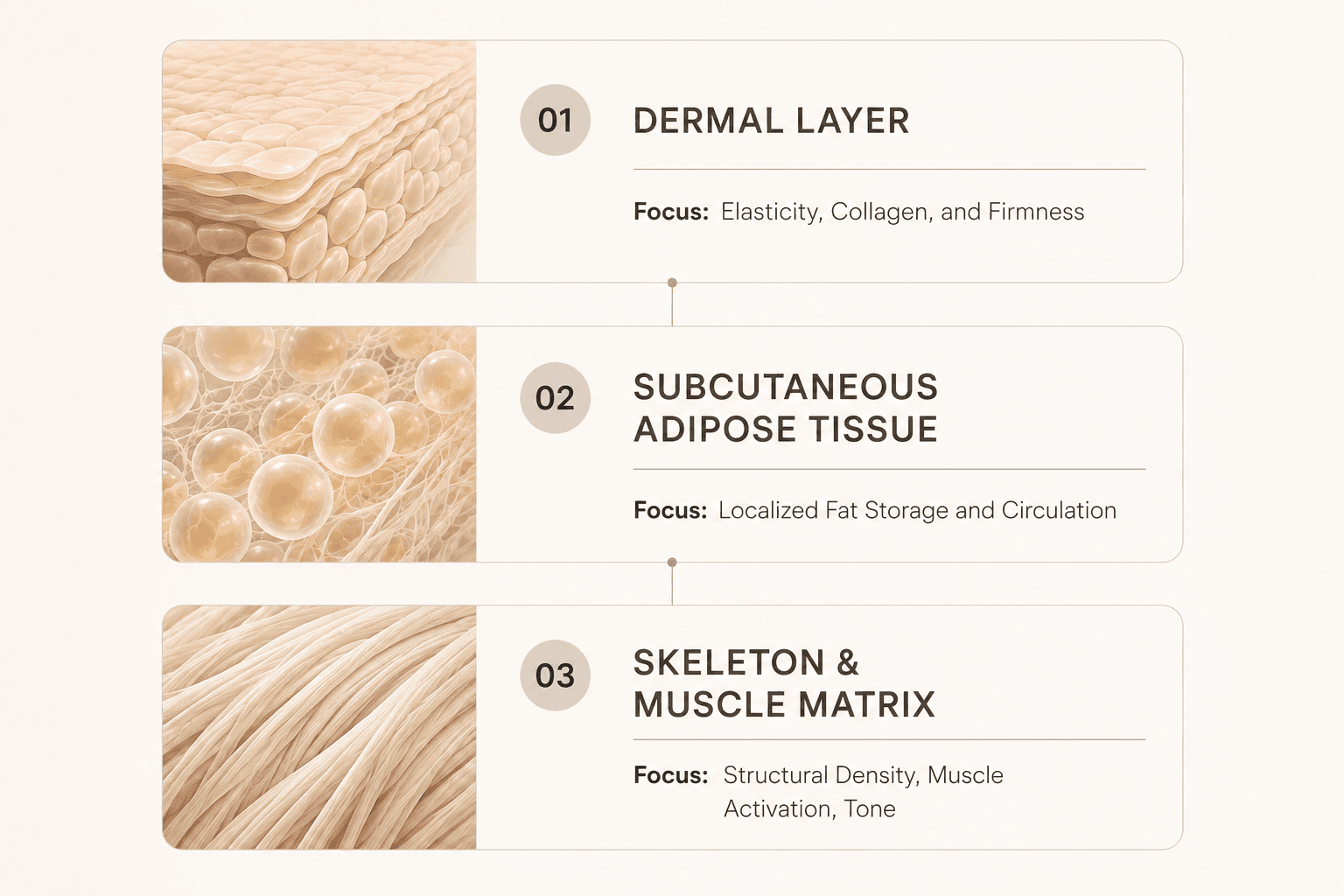
Your silhouette is shaped by several layers working together: the dermal layer, subcutaneous fat, intramuscular tissue, and the skeletal muscle matrix underneath it all.
Non-invasive contouring technologies are each engineered to interact with a specific layer, and if you misidentify which one you actually need to target, your results will stall no matter how consistent you are.
Layer 1: Skeletal Muscle Density and Tone
When an area looks soft or underdefined, even in someone who's already lean, the culprit is usually incomplete muscle engagement, not extra fat. Voluntary exercise depends on signals sent from the brain, and those signals only ever activate a portion of the muscle fibres available during a typical workout. If your goal is deeper core stability, lifted tissue, or visibly defined muscle lines, your focus needs to be on therapies that drive deep, involuntary muscle activation.
Layer 2: Subcutaneous Adipose Tissue
Subcutaneous fat sits just beneath the skin, above the muscle. Unlike visceral fat (which wraps around internal organs and responds quickly to changes in diet), subcutaneous deposits contain varying concentrations of alpha-2 and beta-2 adrenergic receptors.
Areas with a lot of alpha-2 receptors, like the lower abdomen, lower back, and inner thighs, tend to resist diet and exercise no matter how disciplined you are. Shifting this layer calls for approaches that improve micro-circulation, apply targeted heat, or stimulate natural fat breakdown without harming the tissue around it.
Layer 3: Dermal Laxity and Skin Elasticity
If an area looks uneven, sags, or has lost its resilience after weight loss or simply from age, the issue usually isn't muscle or fat at all; it's collagen breakdown and general skin degradation. Treating loose skin with a fat-reduction approach can actually make the laxity more noticeable, not less. What this layer actually needs is a therapy built around energy production and structural collagen renewal.
Evaluating the Protocols: A Strategic Breakdown
Once you understand how each technology interacts with your physiology, choosing the right mechanism gets a lot easier.
High-Intensity EMS reshapes how muscle conditioning works by bypassing the nervous system's usual limits and sending electrical impulses directly into the muscle tissue.
It produces intense, sustained contractions that recruit a far greater share of the targeted muscle fibres than resistance training alone ever could.
Those rapid contractions force structural adaptation within the muscle, fibres remodel, density increases, and the sheer energy demand this places on the tissue triggers a metabolic cascade that also encourages nearby fat stores to break down.
Best suited for: People after deeper core conditioning, abdominal definition, structural lifting, muscle preservation through weight changes, or anyone whose training has plateaued.
Pairing thermal energy with mechanical and movement-based protocols is one of the more advanced ways to activate localised metabolism.
Systems like Infrared Vacuum Cardio enclose a targeted zone in a vacuum environment combined with localised far-infrared heat, while low-impact movement happens simultaneously.
Vacuum pressure lowers ambient tissue pressure, which expands local capillary beds and pulls more blood flow into cooler areas where subcutaneous fat tends to collect. At the same time, infrared heat penetrates below the skin, raising local tissue temperature and encouraging fat breakdown.
Best suited for: Mobilising stubborn subcutaneous fat around the lower body and midsection, improving fluid drainage, easing tissue congestion, and boosting circulation without stressing the joints.
Cellular and Oxygen Therapies (Red-Light & ReVitale Chamber)
Reshaping the body from the inside out requires protocols that support cellular energy and tissue repair directly.
Low-level light therapy, red or near-infrared light, and oxygen-based systems like the ReVitale Chamber deliver concentrated light wavelengths and elevated oxygen levels to the tissue.
Cells absorb red light photons, which boosts mitochondrial energy output. That surge in cellular energy supports collagen production, eases inflammation, and speeds up natural repair. Meanwhile, elevated oxygen further saturates the blood plasma, aiding regeneration across the treated area.
What Is a Body Sculpting Treatment, and What Should You Weigh Before Choosing One?
If you're still asking what a body sculpting treatment actually involves at a biological level, it helps to think of it less as a single procedure and more as a category of tools, each one built to interact with a different layer of tissue. Picking the right one means being honest about your own health status, baseline biology, and daily stress load.
Baseline Body Composition and Adiposity
Non-invasive protocols are precision tools meant for refinement, structural reconditioning, and localised contouring. They were never designed to replace significant weight loss. If you're already close to your target weight, you'll see the clearest, most noticeable results from non-invasive therapies.
Hormonal Balance and Stress Dynamics
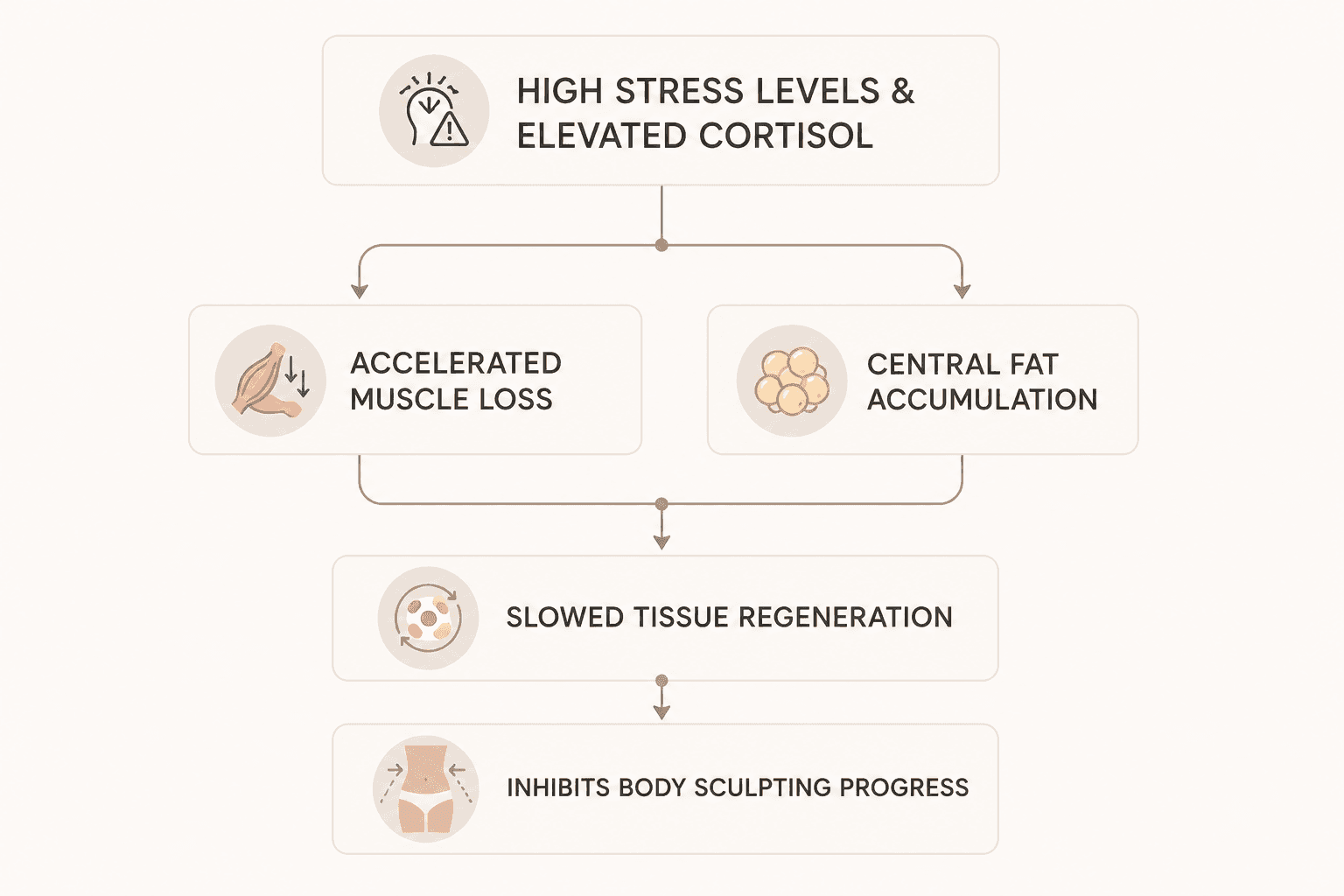
Hormones play a bigger role in reshaping the body than most people realise. Chronically elevated cortisol from ongoing stress promotes central fat storage, accelerates muscle breakdown, and destabilises metabolism generally. Push through an aggressive sculpting protocol while your stress levels are already high, and your body's ability to repair muscle and clear metabolic waste takes a hit.
Pairing your sculpting plan with nervous system recovery (cold-based therapies, dry floatation, whatever helps you actually downshift) keeps your internal environment supportive of the changes you're trying to make.
Metabolic Stability and Daily Nutrition
Whatever structural shifts a sculpting technology initiates, your metabolic system is the one that actually carries them out. Adequate protein, healthy fats, and proper hydration give your body the raw materials it needs for muscle repair and efficient waste clearance through the lymphatic system.
Comparing Protocols: Matching Modalities to Physical Needs
Primary Focus | Recommended Protocol | Target Tissue Layer | Primary Biological Outcome |
Lack of Muscle Tone & Core Strength | Advanced EMS Activation | Deep Skeletal Muscle Matrix | Full muscle unit engagement and structural density |
Stubborn, Resistant Fat Deposits | Subcutaneous Adipose Tissue | Enhanced microcirculation and localised fat mobilisation | |
Skin Laxity & Texture Concerns | Dermal Layer | Mitochondrial energy stimulation, collagen support, tissue repair | |
High Stress & Fluid Retention | Autonomic Nervous System | Parasympathetic reset, cortisol reduction, reduced fluid stagnation |
Practical Checklist: How to Choose Your Blueprint
Before committing to a provider or a treatment plan, run through this checklist to make sure you're getting something safe, effective, and actually built around you:
✔ Insist on an initial diagnostic assessment: Steer clear of clinics that prescribe standard treatments without first assessing your body composition, skin elasticity, and physical history.
✔ Prioritise multi-treatment protocols: A single device rarely solves a complex physical goal; look for plans that combine muscle activation, circulation work, and recovery therapy.
✔ Make sure nervous system support is built in: Recovery and stress-reduction therapy should be part of the plan, not an afterthought, if you want your stress hormones to stay in check.
✔ Set clear benchmarks. Track progress with measurements, body composition data, and photos instead of just the weighing scale.
If you've searched "body sculpting treatments near me" and felt overwhelmed by the number of clinics that all seem to promise the same thing, this checklist is exactly how to tell them apart. The providers worth trusting are the ones that start with assessment, not with a menu.
The ALIINE Method: Diagnostic Precision for Longevity
At ALIINE, we don't believe in standard, one-size-fits-all treatment. We see body sculpting as part of a bigger picture: long-term metabolic health, structural conditioning, and overall vitality, not a quick fix.
Our program starts with a detailed look at your physical structure, body composition, and broader wellness goals. From there, our clinical team builds an integrative, multi-step plan designed specifically around what your body needs.
We combine advanced non-invasive technologies, including precision EMS muscle activation, infrared vacuum protocols, red-light therapy, body sculpting laser treatments, and the ReVitale Chamber, with dedicated nervous system recovery to deliver sustainable, targeted change. The goal isn't a temporary look but a resilient, well-conditioned physique that actually reflects what's happening inside your body.
Frequently Asked Questions
How to start body sculpting for beginners?
Begin with a clinical body composition diagnostic to clarify if your goal is muscle tone, stubborn fat loss, or skin tightness, then start with foundational therapies like EMS or infrared protocols alongside balanced protein intake.
Can body sculpting reduce belly fat?
Yes. Thermal and vacuum protocols increase microcirculation to break down stubborn abdominal fat, while deep EMS targets underlying core muscles to pull the stomach in tighter.
Can I do body sculpting at home?
Not effectively. At-home consumer devices lack the high power output and precision of clinical-grade technologies needed to reach deeper fat and muscle layers.
How long does body sculpting last?
Results are long-lasting and permanent for the specific fat cells destroyed, provided you maintain a stable weight and an active lifestyle.
Does fat come back after body sculpting?
Destroyed fat cells are permanently removed, but remaining fat cells in the body can still expand if you enter a significant caloric surplus later on.